
Cluster headache is often called one of the most painful conditions a person can experience. But unless someone has lived through it, it can be hard to truly understand. If you’re trying to explain cluster headache to friends, family, or coworkers, you might feel frustrated, exhausted, or even misunderstood. You’re not alone in that.
Here’s how to help the people around you better understand what you’re going through.
Start with the Basics: It’s Not “Just a Bad Headache”
Cluster headache causes severe, intense pain, usually on one side of the head, often around or behind one eye. Attacks can come on quickly and feel sharp, burning, or piercing. They’re sometimes described as “ice pick” pain.
Unlike migraine, people with cluster headache often feel restless during an attack. Instead of lying down in a dark room, they may pace, rock back and forth, or feel unable to sit still because the pain is so intense.
Still, many people hear the word “headache” and think of tension headaches or even migraines. Cluster headache is different. You might say something like, “Cluster headache is a neurological condition. It’s not stress-related, and it’s not something I can just push through.”
Explain the Pattern: Why It’s Called “Cluster”
One of the most confusing parts for others is the pattern. Cluster headaches tend to happen in cycles (or “clusters”). This means you might have multiple attacks a day for weeks or months at a time. Then the attacks may stop for a period before returning again.
You could explain it this way: “It comes in waves. During a cluster period, I can have attacks every day, sometimes multiple times a day. Then it might go away for a while, but it usually comes back.”
Attacks are also often predictable. They may happen at the same time each day, sometimes even waking you from sleep. That unpredictability between cycles—and predictability during them—can be emotionally exhausting. Let your loved ones know that it’s not only the pain, but the anticipation, that can be difficult.
Talk About the Symptoms Beyond Pain
Cluster headache isn’t just head pain. During an attack, you might also experience:
- A red or watery eye on the painful side
- Nasal congestion or a runny nose
- A drooping eyelid
- Facial sweating
- Sensitivity to light
Explaining these symptoms helps others see that this is a full-body neurological event, not something mild or fleeting, like an ordinary headache.
Share What It Feels Like in Your Words
You don’t have to use dramatic language if you’re not comfortable. But it can sometimes help to be honest. Some people describe cluster headache as:
- “The worst pain I’ve ever felt.”
- “Like a hot poker behind my eye.”
- “So intense that I can’t focus on anything else.”
If it impacts your daily life—your work, parenting, sleep, or social plans—say that clearly. Loved ones may not realize how much you’re juggling unless you tell them.
Be Clear About What You Need
Sometimes people respond awkwardly because they don’t know how to help. In these cases, you might say:
- “During an attack, I need space.”
- “If I cancel plans, it’s because I physically can’t function.”
- “What helps most is just understanding and flexibility.”
It’s okay to set boundaries. It’s okay to ask for support.
Talk About Treatment and Hope
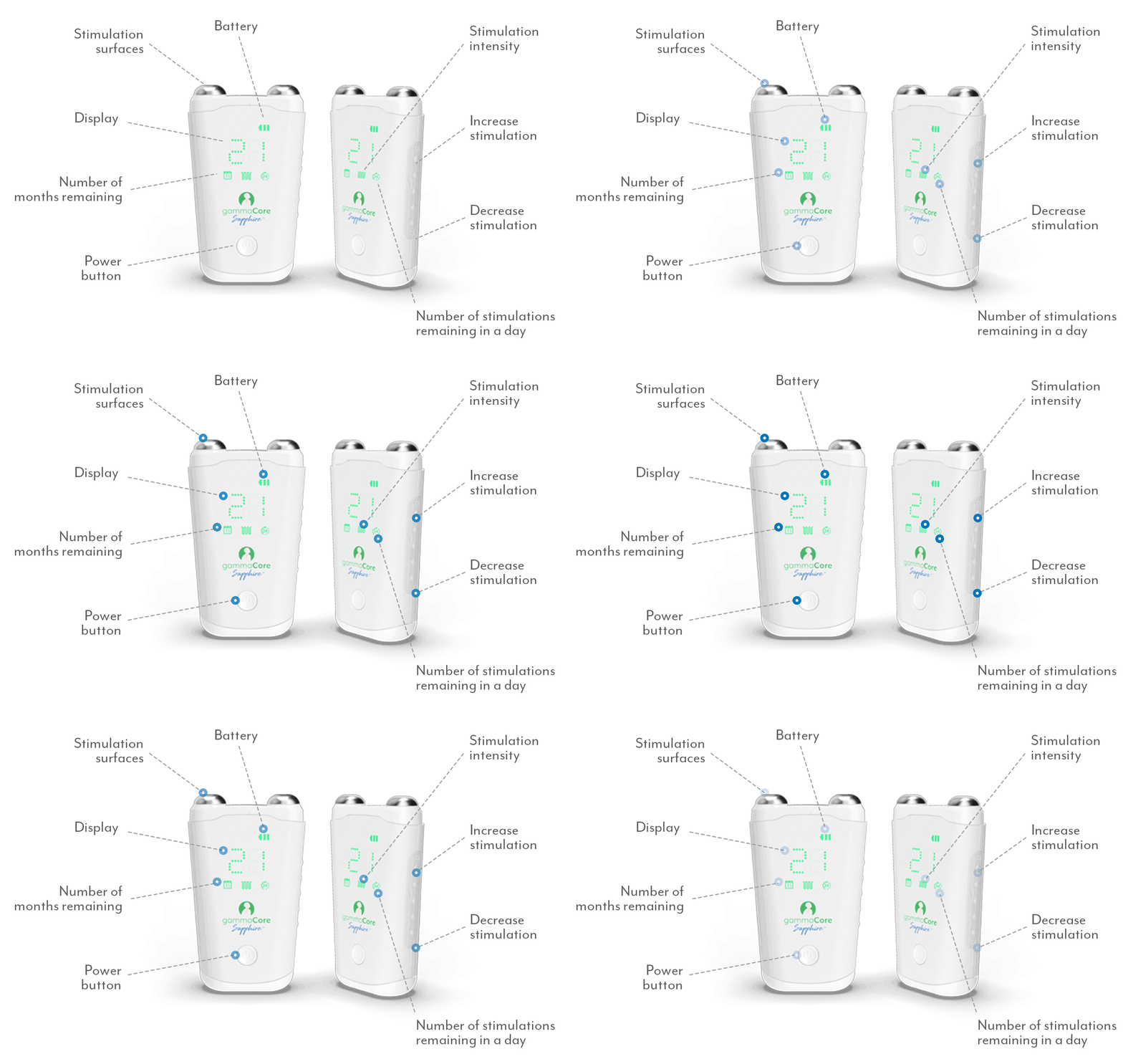
Cluster headache is serious, but there are treatment options available. Preventive and acute therapies can help reduce how often attacks happen or how severe they are. For some people, prescription options like non-invasive vagus nerve stimulation may be part of their care plan. gammaCore™ non-invasive vagus nerve stimulator (nVNS) is FDA-cleared for the adjunctive use for the preventive treatment of cluster headache in adult patients and for the acute treatment of pain associated with episodic cluster headache in adult patients. It is a handheld device that delivers mild electrical stimulation to the vagus nerve through the skin on the side of the neck and is used under a health care provider’s guidance.
You might explain it like this: “I’m working with my doctor on a treatment plan. There are tools designed specifically for cluster headache, and I’m doing what I can to manage it.”
Sharing that you’re actively managing your condition can reassure loved ones that you’re not just “suffering through” it alone.
Remember: You Don’t Owe Anyone a Perfect Explanation
Explaining cluster headache can feel vulnerable. Not everyone will immediately understand, and that’s okay. What matters is that you feel heard, supported, and believed.
If you’re living with cluster headache, you deserve compassion. And the more we talk about it openly, the easier it becomes for others to understand that this is a real, neurological condition that requires real care.
Talk to your health care provider to see if gammaCore is right for you, or visit our clinic finder to help locate a health care provider near you. For additional information, contact our dedicated Customer Experience team at 888-903-2673 or customerservice@electrocore.com.
For important safety information and instructions for using gammaCore, please review the Important Safety Information and Instructions for Use.
EPM-02655